
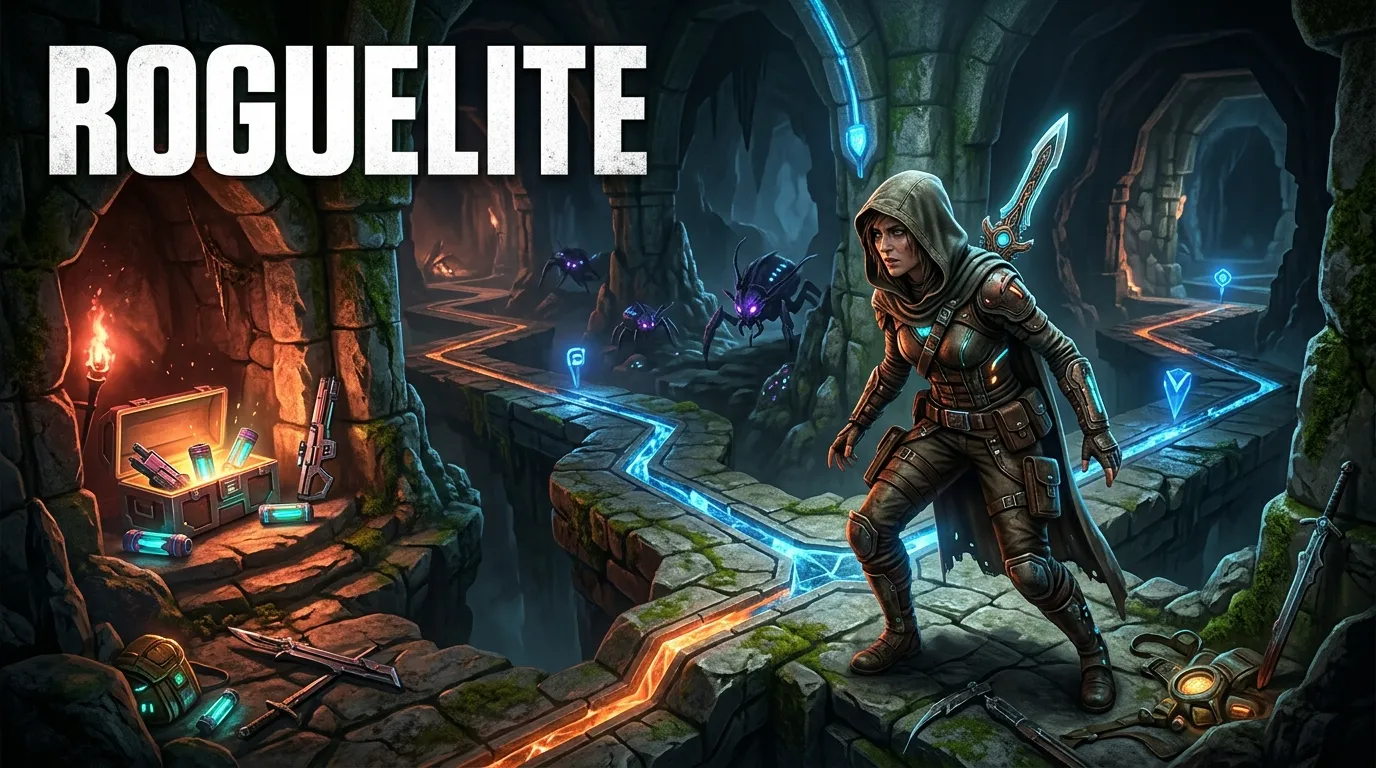
A roguelite is a game built around repeatable runs where failure sends you back to begin again. However, players usually keep some progress between attempts. That persistent progress can include upgrades, characters, weapons, currencies, abilities, or story developments.
The format draws on classic roguelikes but gives players more lasting rewards after unsuccessful runs. Each attempt can still change through random levels, enemies, items, or encounters. This mix makes repeated play central to the experience.
Direct answer: A roguelite is a run-based video game where death usually ends the current attempt, but some progress carries forward. Randomized elements make runs different, while permanent upgrades, unlocks, or story progress give players reasons to return after losing.
These Games at a Glance
| Feature | How It Usually Works |
|---|---|
| Run structure | Players make repeated attempts toward a larger goal |
| Death | Usually ends the current run |
| Persistent progress | Some upgrades, unlocks, or resources remain |
| Randomization | Levels, items, enemies, or rewards may change |
| Replayability | Different combinations make repeated runs less predictable |
| Player improvement | Knowledge and mechanical skill improve across attempts |
| Common styles | Action, platforming, shooting, deck-building, and RPG systems |
| Key distinction | Progress can continue even after a failed run |
Key Takeaways
- Runs are designed to end and restart.
- Death usually removes temporary progress from the current attempt.
- Permanent upgrades or unlocks can survive between attempts.
- Procedural generation often changes levels, rewards, or encounters.
- Player knowledge remains important alongside permanent progression.
- The terms roguelike and this style overlap in everyday gaming discussions.
- The genre can work with action, card, shooter, platforming, and RPG mechanics.
What Does This Term Mean?
The easiest way to understand the genre is to think about what happens after you lose. A traditional run may disappear, including temporary equipment and bonuses collected during that attempt. Yet the larger game can continue moving forward.
For example, you might earn a currency during one run and spend it afterward. That purchase could improve health, unlock another weapon, or open a new ability. Your next attempt begins fresh in several ways, but it isn’t always a complete reset.
This design creates two forms of progress at once. Your character or account can become stronger through persistent systems. At the same time, you learn enemy behavior, useful combinations, routes, and strategies through repeated play.
Where Did This Game Style Come From?
Modern run-based games owe much of their design vocabulary to Rogue, the influential dungeon crawler developed around 1980. Rogue featured procedurally generated dungeons, turn-based actions, resource management, and permanent death. Its design later inspired games that became known as roguelikes.
As developers experimented with those ideas, they began combining them with other genres. Real-time combat, platforming, shooting, deck-building, and permanent upgrade systems became increasingly common. These variations created experiences that could feel quite different from traditional Rogue-style dungeon crawlers.
The terminology has never had one universally enforced definition. Even the 2008 Berlin Interpretation describes roguelikeness through multiple factors rather than one absolute rule. Its authors also stated that missing individual factors doesn’t automatically exclude a game from the genre.
Roguelite vs. Roguelike: What Is the Difference?
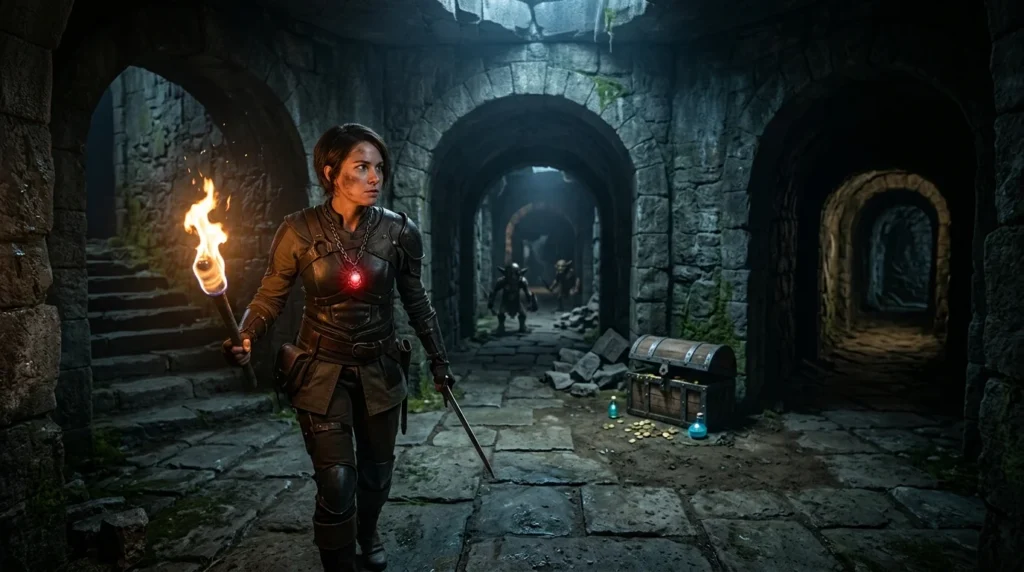
The clearest practical difference is persistent progression between runs. Traditional roguelikes generally place more emphasis on starting fresh after death. Modern lighter variants commonly preserve upgrades, unlocks, currencies, or other forms of progression.
| Feature | Traditional Roguelike | Typical Modern Variant |
|---|---|---|
| Death | Character progress is usually lost | Current run ends |
| Permanent upgrades | Usually limited or absent | Common |
| Combat | Traditionally turn-based | Often real-time |
| Movement | Traditionally grid-based | Can use many systems |
| Random generation | Central feature | Usually important |
| Progress between runs | Mainly player knowledge | Knowledge plus persistent unlocks |
| Genre mixing | Usually closer to dungeon RPGs | Often blended with other genres |
These categories aren’t rigid enough to settle every debate. Developers, stores, reviewers, and players sometimes apply the labels differently. Looking at the game’s actual mechanics is often more useful than arguing over its store tag.
The Core Mechanics That Make These Games Work
Run-Based Gameplay
A run is one attempt to advance through the game’s challenge. It might last several minutes or considerably longer, depending on the design. Losing typically sends you back to a hub, starting area, or another reset point.
That reset isn’t necessarily wasted time. You may have discovered a new enemy pattern or learned which upgrades work together. Good run-based design turns failed attempts into useful information for the next attempt.
Procedural Generation and Randomization
Procedural generation uses systems to create or arrange content rather than presenting an identical sequence every time. A game might change room layouts, enemy placements, rewards, weapons, or available upgrades. The amount of randomization varies considerably between titles.
Randomness helps prevent players from relying entirely on memorization. Instead, they must react to what appears during each attempt. This can make familiar mechanics produce different situations across dozens of runs.
Permadeath or Run Resets
Permadeath sounds severe, but its meaning depends on the game. It usually means the current character or attempt cannot simply continue from the point of death. Players return to an earlier state and begin another run.
Modern games often soften that loss with permanent progression. Losing can therefore carry consequences without erasing everything you accomplished. That balance separates many contemporary run-based games from stricter traditional designs.
Meta-Progression
Meta-progression describes progress that exists outside an individual run. You might unlock stronger starting equipment, new characters, additional abilities, or access to new areas. Some games also use story events as a form of persistent advancement.
This system gives players two goals during difficult attempts. They can try to complete the run while collecting resources that improve future chances. A failed attempt can still contribute toward a larger objective.
Why Are These Games So Replayable?
Randomized choices create situations that can’t always be solved with the same strategy. One run might provide a powerful weapon early, while another forces you to work with unfamiliar abilities. Players must adjust rather than follow one fixed solution.
The restart structure also creates clear stopping and starting points. You can often complete an attempt without committing to a long story chapter. At the same time, persistent goals can encourage another run after the previous one ends.
Skill development adds another layer of replayability. Better upgrades can help, but players also become more familiar with timing and enemy behavior. Success can therefore reflect both in-game progression and personal improvement.
Common Types of These Games
The format isn’t limited to one combat system or visual style. Developers can combine repeated runs and persistent progression with many established genres. That flexibility explains why the term appears across very different games.
Common variations include the following styles.
- Action games with fast real-time combat.
- Platformers built around randomized stages.
- Twin-stick and top-down shooters.
- Deck-building games with changing card choices.
- Dungeon crawlers with randomized rooms.
- Strategy games with run-specific resources.
- Survival games built around escalating enemy waves.
Players interested in action RPG mechanics can also read Techanta’s Path of Exile 2 shapeshifting guide. It explains how character forms and build choices can change combat strategies. Those systems differ from run-based progression, but they show how modern games layer multiple mechanics together.
Popular Examples and What They Teach You About the Genre
Games commonly discussed in this category include titles such as Hades, Dead Cells, and Slay the Spire. Their moment-to-moment gameplay differs substantially. Yet each demonstrates how repeated attempts can combine changing conditions with longer-term advancement.
Hades combines action combat with persistent story development and upgrades. Dead Cells combines platforming and combat with unlockable equipment. Slay the Spire applies run-based design to deck-building, where card choices shape each attempt.
These differences are useful for newcomers. You don’t need to enjoy one specific combat format to enjoy the broader structure. Choosing a game based on your preferred genre is often easier than choosing based only on its label.
Why Failure Feels Different in These Games
Most games treat failure as an interruption before you reload a checkpoint. Run-based games can make failure part of the intended progression cycle. Losing tells you what your current strategy can’t handle.
Persistent systems can reduce the frustration of restarting. Even an unsuccessful run may unlock something, earn currency, or provide useful knowledge. The next attempt can then feel connected to the previous one, rather than completely separate.
This structure also changes how players judge progress. Reaching a final boss isn’t the only sign of improvement. Surviving longer, learning a difficult enemy, or discovering a strong combination can all represent meaningful gains.
Are Roguelites Difficult?
Many are challenging because repeated failure is built into their design. That doesn’t mean every game in the category targets expert players. Difficulty depends on combat speed, progression systems, accessibility options, and how much permanent power the game provides.
Meta-progression can make difficult sections more manageable over time. Better equipment or stronger starting abilities may reduce pressure during later attempts. Your growing knowledge of the game’s systems can make an even larger difference.
Hardware can also affect the experience in fast-action games. Resolution and frame rate influence visual clarity and responsiveness differently. Techanta’s 4K resolution guide explains those display considerations for gaming and other uses.
Who Should Try This Type of Game?
These games suit players who enjoy learning through repetition. They also work well for people who like experimenting with weapons, abilities, builds, or changing strategies. Randomized runs can keep familiar mechanics from becoming predictable too quickly.
They may be less appealing if you strongly dislike losing temporary progress. Players who prefer fixed levels and predictable checkpoints may find repeated resets frustrating. Choosing a title with generous permanent progression can make the format easier to approach.
You can also browse Techanta’s gaming and technology coverage for related guides. The site’s technology content covers gaming alongside hardware, displays, software, and other digital topics.
Frequently Asked Questions
What does roguelite mean in gaming?
A roguelite usually means a run-based game that borrows ideas from traditional roguelikes while allowing some persistent progression. Death may reset your current attempt, but upgrades, unlocks, currencies, or story events can remain. The exact definition varies because gaming communities don’t use the term identically.
Do you lose everything when you die?
Usually, you lose much of what you collected during the current run. Permanent upgrades or unlocked content may remain available afterward. The exact balance between temporary and persistent progress depends on the individual game.
Is procedural generation required?
Randomized or procedurally generated content is strongly associated with this style. Still, games can use different amounts of randomization. Some change entire maps, while others randomize enemies, rewards, rooms, or upgrade choices.
Why do people confuse roguelikes and roguelites?
Both categories share historical roots and several common mechanics. Modern games also mix genres so heavily that a clean boundary isn’t always possible. Store tags and everyday player language often use the terms more loosely than traditional definitions do.
Are these games good for beginners?
They can be, especially when permanent progression makes later attempts easier. Beginners should expect failure to be part of learning rather than an unusual setback. A game with clear upgrades and short runs can provide an approachable introduction.
Understanding the Genre Before Your Next Run
Run-based games turn restarting into part of progression rather than a simple punishment. Randomized encounters encourage adaptation, while persistent systems give repeated attempts a larger purpose. That combination can produce strong replay value without requiring every playthrough to follow the same path.
The most useful distinction is what happens when your character dies. Check what resets, what remains, and how much the next attempt benefits from earlier progress. Once you understand that loop, gaming genre labels become much easier to interpret.


