

LPDDR5 is a high-speed, low-power memory standard designed for mobile and compact computing devices. It improves memory bandwidth while keeping energy use and heat under control. You’ll find this technology in smartphones, tablets, thin laptops, automotive systems, and other power-sensitive hardware.
For U.S. buyers, understanding the memory type can make device specifications easier to compare. TechAnta’s RAM coverage looks at how capacity affects demanding workloads, but memory technology also affects speed and efficiency. The right combination can improve multitasking, gaming, media processing, and battery-powered performance.
| Key Fact | Details |
|---|---|
| Full name | Low Power Double Data Rate 5 |
| Memory type | Low-power DRAM |
| Maximum standard data rate | Up to 6,400 Mbps |
| Common devices | Smartphones, tablets, thin laptops, automotive systems |
| Main advantages | High bandwidth, lower power use, compact integration |
| Common limitation | Usually soldered and not user-upgradeable |
| Successor | LPDDR5X |
| LPDDR5X standard speed | Up to 8,533 Mbps in the original specification |
Direct answer: This low-power system memory is built for devices that need strong performance without excessive battery drain. It can reach data rates up to 6,400 Mbps. Its design also supports efficient power management, making it suitable for smartphones, thin laptops, tablets, vehicles, and other compact computing systems.
What Is LPDDR5 and What Does It Mean?
The abbreviation stands for Low Power Double Data Rate 5. It belongs to the LPDDR family of DRAM technologies created for power-sensitive electronics. Unlike typical desktop memory, its priorities include efficiency, compact packaging, and high data throughput.
Memory acts as temporary working space for a device’s processor. Applications and operating systems place active data there for fast access. Greater bandwidth allows processors to move more information without waiting as often.
Samsung lists data rates up to 6.4 Gbps for its fifth-generation low-power memory products. The company also lists transfer performance reaching 51.2 GB/s in supported configurations. These figures help explain why this memory generation became useful for data-heavy mobile workloads.
How Does Low-Power Mobile Memory Work?
Modern processors constantly exchange information with system memory. Faster communication can help processors handle demanding applications without creating unnecessary delays. Mobile devices must accomplish this while operating within strict battery and thermal limits.
This memory generation uses power-management techniques that adjust operation according to workload requirements. Lower-power states can reduce unnecessary energy use when maximum performance isn’t required. Higher-performance operation becomes available when workloads need more bandwidth.
That flexibility matters because phones rarely operate at full load continuously. Reading a message needs fewer resources than playing a demanding game. Efficient memory can respond to those changing workloads without treating every task identically.
Speed and Performance Explained
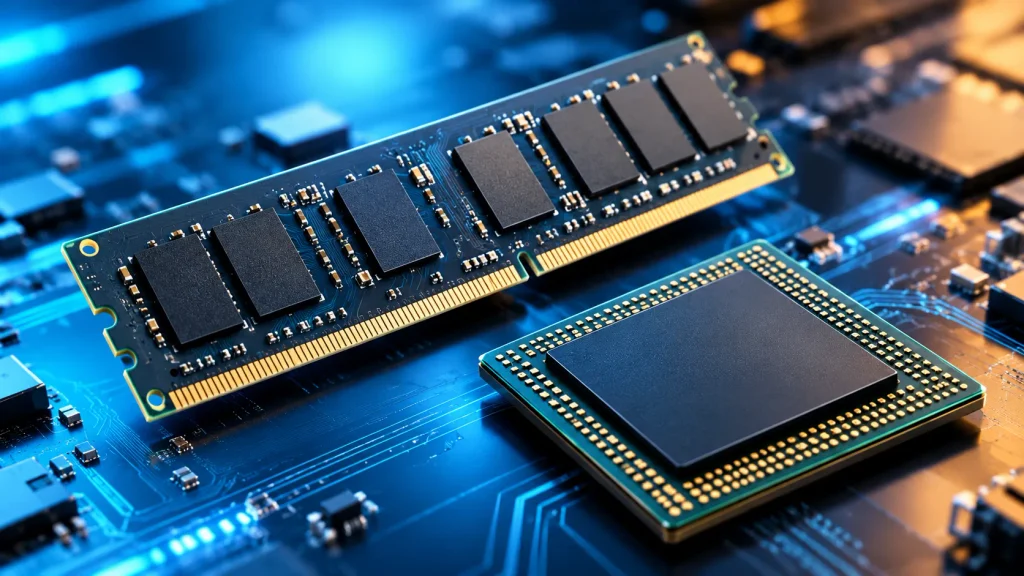
A major generational improvement came from increased data transfer capability. Samsung specifies speeds up to 6,400 Mbps for its products based on this technology. Samsung also reports up to 50% higher bandwidth at 6,400 Mbps versus its 4,266 Mbps LPDDR4X comparison.
Higher bandwidth gives processors faster access to information needed by active workloads. This can benefit high-resolution cameras, graphics processing, multitasking, and some artificial intelligence tasks. Actual device performance still depends on the processor, software, cooling, and memory configuration.
Memory specifications should therefore never be judged by one number alone. A faster memory standard cannot compensate for a weak processor or poorly designed software. It works as one component within a larger system.
Why Power Efficiency Matters
Portable electronics have a limited amount of battery energy available. Every active component competes for part of that energy budget. Memory efficiency therefore matters alongside processor, display, modem, and storage efficiency.
Samsung reports up to 20% power reduction for its fifth-generation mobile DRAM compared with the previous generation. The exact savings inside a consumer device can differ considerably. Hardware design, workload, capacity, and manufacturer configuration all influence real battery consumption.
Reduced memory power can also help engineers manage heat inside compact products. Phones and thin laptops have much less cooling space than desktop computers. Lower energy requirements can support sustained performance within tighter thermal limits.
This: Standard vs. LPDDR4X
LPDDR4X remains an important reference because it powered many earlier smartphones and portable computers. Samsung lists LPDDR4X speeds around 4,266 Mbps for relevant products. The newer generation can reach 6,400 Mbps under supported configurations.
| Feature | LPDDR4X | Fifth-Generation Low-Power DRAM |
|---|---|---|
| Typical maximum data rate | Up to 4,266 Mbps | Up to 6,400 Mbps |
| Primary focus | Mobile efficiency | Higher bandwidth with mobile efficiency |
| Common devices | Older phones and laptops | Newer phones, laptops, vehicles |
| Upgradeability | Usually soldered | Usually soldered |
| Generation | Earlier | Newer |
The speed difference can provide more memory bandwidth for demanding applications. Yet buyers shouldn’t assume every newer device will outperform every older one. Processor design and software remain major parts of real-world performance.
The newer standard makes the most sense when manufacturers can use its bandwidth effectively. Camera processing and mobile gaming are good examples. Increasingly demanding on-device computing can also benefit from faster memory access.
How Does It Compare to DDR5?
DDR5 and low-power mobile memory share a generation number, but they target different systems. DDR5 commonly appears in desktops, workstations, servers, and upgradeable laptops. Low-power memory favors devices where battery life and physical space carry greater importance.
DDR5 is commonly installed through replaceable DIMM or SO-DIMM modules. Low-power memory is typically integrated directly into the device’s hardware. That integration can save space and support efficient electrical connections.
This design creates an important tradeoff for buyers. A thin laptop may gain battery and packaging advantages from soldered memory. However, its RAM usually cannot be replaced or expanded later.
| Feature | LPDDR Mobile Memory | DDR5 |
|---|---|---|
| Main priority | Power efficiency and compact design | Capacity, flexibility, desktop-class use |
| Common hardware | Phones, tablets, thin laptops | Desktops, workstations, servers |
| Installation | Usually soldered | Often removable modules |
| User upgrades | Usually unavailable | Commonly available |
| Battery-focused design | Yes | Not the primary goal |
Neither technology is automatically better for every computer. A desktop owner may value replaceable DDR5 modules and larger capacity options. A laptop buyer may prefer efficient integrated memory and longer unplugged operation.
What Is LPDDR5X?
LPDDR5X extends the same low-power memory family with higher performance. The original JEDEC extension increased supported data rates to 8,533 Mbps. Current manufacturer implementations can go beyond those earlier figures.
Samsung now advertises newer LPDDR5X products reaching data processing speeds up to 10.7 Gbps. That illustrates how commercial implementations can advance beyond earlier specification milestones. Buyers should check the actual device specification rather than relying only on the memory family name.
Faster variants are increasingly useful for intensive on-device workloads. Generative AI, advanced image processing, high-resolution video, and graphics can consume considerable memory bandwidth. More bandwidth gives compatible processors greater room to move data quickly.
Where Is This Memory Used?
Smartphones are among the most familiar applications for low-power mobile DRAM. Modern phones constantly balance cameras, apps, graphics, wireless connections, and background processes. High-bandwidth memory helps feed those workloads while respecting limited battery capacity.
Thin laptops and tablets can benefit for similar reasons. Their manufacturers often prioritize small motherboards and efficient battery operation over replaceable components. Integrated memory supports that design approach.
Automotive electronics represent another growing use case. Modern vehicles process information for displays, infotainment, driver assistance, cameras, and connected features. Samsung specifically positions this memory family for mobile and automotive applications.
Does More RAM of This Type Make a Device Faster?
More memory capacity can improve performance when your applications would otherwise exhaust available RAM. Keeping more active information in memory reduces pressure on slower storage. This matters most during heavy multitasking or memory-intensive workloads.
Capacity and memory speed aren’t interchangeable, though. A device with more RAM can hold more active information. Faster RAM determines how quickly supported hardware can transfer that information.
For everyday U.S. buyers, capacity should usually be considered before small differences in memory speed. Your applications must fit comfortably within available RAM first. Processor performance, storage, cooling, and software should then influence the wider buying decision.
Can You Upgrade It Later?
In most consumer devices, this type of memory is soldered to the motherboard. That arrangement helps manufacturers save space and design efficient memory connections. It also means buyers usually cannot add another memory module later.
This limitation deserves attention when buying a thin laptop. A lower-memory configuration might meet your needs today but become restrictive later. Choosing sufficient capacity at purchase can extend the useful life of a non-upgradeable machine.
Desktop users have different priorities because conventional DDR memory is often replaceable. The broader TechAnta technology site also covers hardware and consumer technology subjects.
What Should You Look for When Buying a Device?
Don’t choose a phone or laptop because its specification sheet mentions one memory technology. Start with the applications you expect to use most often. Then consider memory capacity, processor performance, battery life, display quality, and storage together.
Heavy multitaskers should give extra attention to RAM capacity. Gamers and creators should also examine processor and graphics performance. Mobile users may place greater weight on efficiency and battery endurance.
Smartphone maintenance can affect long-term usability as much as specifications do. TechAnta’s guide to preventing common phone issues covers practical device-care considerations. Pairing suitable hardware with sensible maintenance can help preserve the user experience.
Is This Memory Standard Still Good in 2026?
Yes, devices using this generation can still provide strong everyday performance. A newer memory standard doesn’t automatically make existing hardware slow. The processor, capacity, software, and complete system design matter more than the label alone.
LPDDR5X offers higher bandwidth and appears in many newer premium systems. That advantage becomes more relevant for demanding graphics, advanced cameras, and on-device AI. Routine browsing and productivity may show smaller practical differences.
For buyers, the better question concerns the whole device rather than one specification. Compare RAM capacity and memory type alongside processor and battery performance. Also check whether the memory can be upgraded before purchasing a laptop.
Frequently Asked Questions
What is LPDDR5 RAM?
It is a low-power form of DRAM designed for compact, energy-sensitive computing devices. Its architecture combines high data transfer rates with mobile-focused power management. Common applications include phones, tablets, thin notebooks, and automotive electronics.
Is It Faster Than LPDDR4X?
Yes, the newer generation supports higher maximum data rates. Samsung lists up to 6,400 Mbps compared with 4,266 Mbps for its LPDDR4X reference. Actual performance gains depend on the device and workload.
Is It Better Than DDR5?
Neither is universally better because the technologies target different priorities. Low-power memory suits compact and battery-powered systems, while DDR5 commonly supports expandable computers. Your device type and upgrade requirements should guide the choice.
Can this type of RAM be upgraded?
Usually not, because manufacturers commonly solder low-power memory onto the motherboard. The fixed installation helps reduce space and supports efficient system designs. Buyers should choose enough RAM when purchasing the device.
What Is the Difference Between This Standard and LPDDR5X?
The X version extends the technology with higher supported data rates and signaling improvements. The original LPDDR5X specification supported speeds up to 8,533 Mbps. Newer commercial implementations can reach even higher rates.
Does faster RAM improve gaming?
Faster memory can provide additional bandwidth for graphics and processor workloads. Gaming performance still depends heavily on the CPU, GPU, cooling, and software. Memory technology alone doesn’t determine frame rates.
The Bottom Line
Modern low-power memory solves a difficult engineering problem for portable devices. It delivers substantial bandwidth without adopting the power priorities of desktop memory. That balance makes it useful across phones, slim computers, vehicles, and other compact systems.
For buyers, memory type should be one part of a broader hardware comparison. Check capacity, upgradeability, processor performance, battery life, and storage before deciding. Those factors together provide a clearer picture of how a device will perform over time.